
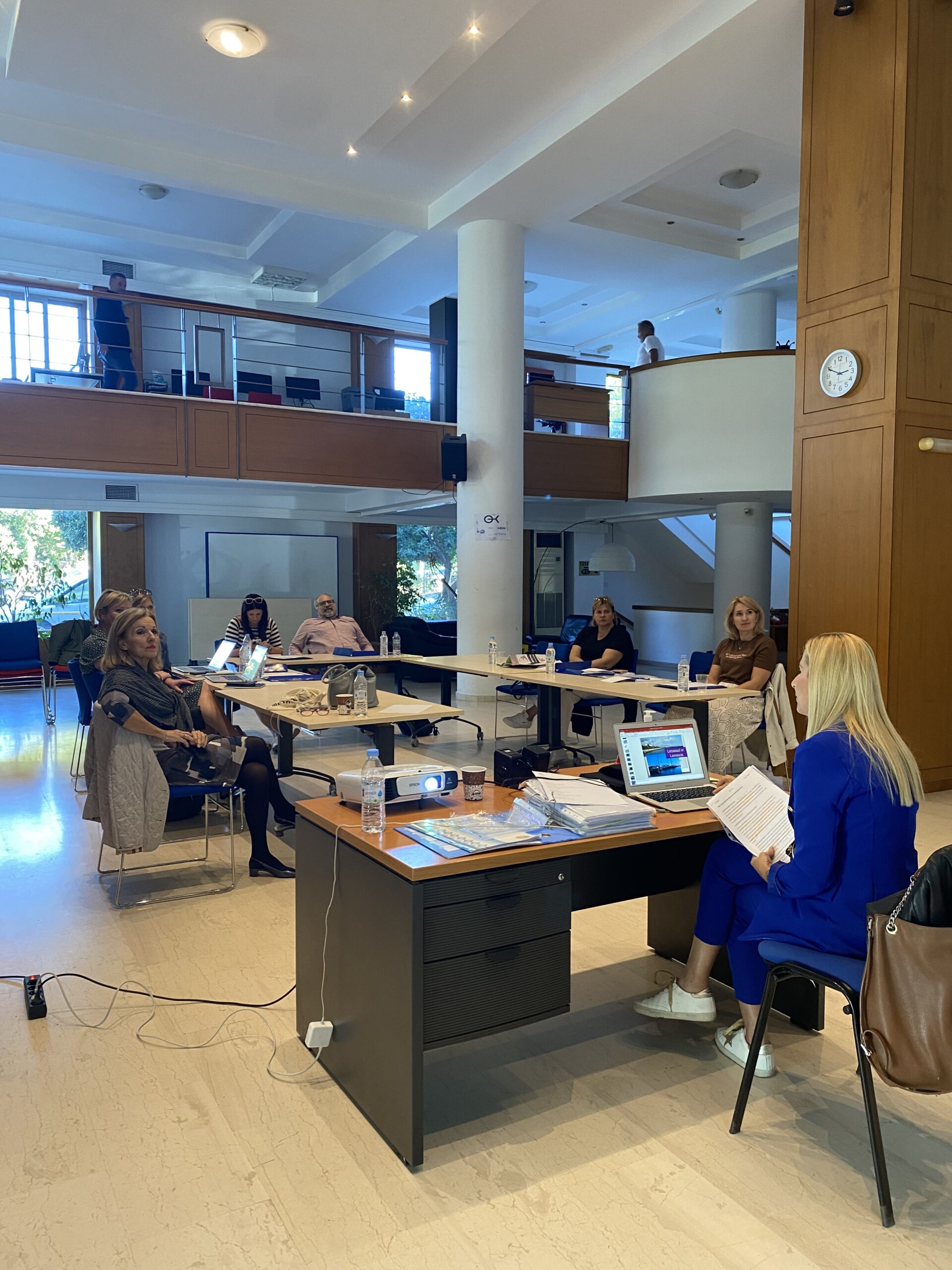
Paideia’s adult education workshops are designed as practical learning interventions for adults of different ages, social backgrounds and educational paths. Their shared aim is to strengthen basic skills, social and digital inclusion, personal development and access to learning opportunities that respond to the real needs of everyday, social and professional life.
All workshops follow the principles of adult education, with experiential and practical methods adapted to the needs of each group. On completion of each workshop, a certificate of attendance is provided, which requires participation in at least eighty percent of the sessions and states the theme, the duration and the main learning units.
OVERVIEW
The workshop examines the relationship between leadership, management and the organisation of teams, with an orientation towards practical application. It is addressed not only to those who hold formal positions of responsibility, but to any adult who coordinates people in work, voluntary or community settings. It focuses on the skills that make a difference in the everyday functioning of a team.
DURATION
16 hours, in 4 sessions of 4 hours.
CERTIFICATE
A certificate of attendance is awarded, provided the participant takes part in at least eighty percent of the sessions.
NEED ADDRESSED
Many adults take on roles of responsibility without having received relevant training. In small organisations, associations and social bodies, the organisation of teams, communication and the management of change often rest solely on experience and intuition. The workshop addresses the need for a practical grounding in leadership, ready to be used in the settings where participants operate.
EDUCATIONAL AIM
The aim is to strengthen the ability of participants to guide and support a team in a collaborative and responsible way. The workshop seeks to turn spontaneous experience into conscious and well-founded practice.
WHO IT IS FOR
The workshop is addressed to adults who exercise or are about to take on coordinating roles. It concerns team leaders and staff of small organisations without management training, volunteers and members of associations who coordinate activities, as well as employees moving into a role with greater responsibility. Adults who wish to develop their organisational and social skills also benefit.
KEY LEARNING UNITS
• Leadership and management in practice
• Roles and responsibilities within the team
• Leadership styles and adaptation to context
• Communication, feedback and active listening
• Motivation and team empowerment
• Decision-making and problem-solving
• Conflict management
• Managing change and encouraging innovation
• Preparing a personal leadership development plan
TRAINING METHOLOGY
The approach combines short presentations with case studies, role play and group exercises. Self-assessment tools help participants identify their personal style, while practical problem-solving connects theory with the real challenges they face.
EXPECTED LEARING OUTCOMES
On completing the workshop, participants recognise the basic principles of leadership and adapt them to their own setting. They communicate more effectively, organise their team better, manage conflicts with greater maturity and support change more constructively.
ASSESSMENT
Assessment is closely linked to practice. From the outset, the role and challenges of each participant are mapped, so that learning connects with their reality. Case studies and group exercises bring out their development, while the personal leadership development plan gathers each person’s conclusions. Self-assessment and a satisfaction questionnaire complete the picture.
MORE INFORMATION
Contact us at contact@paideiaexperttraining.com for information about the program requirements, available implementation dates and participation costs.
