Paideia’s adult education workshops are designed as practical learning interventions for adults of different ages, social backgrounds and educational paths. Their shared aim is to strengthen basic skills, social and digital inclusion, personal development and access to learning opportunities that respond to the real needs of everyday, social and professional life.
All workshops follow the principles of adult education, with experiential and practical methods adapted to the needs of each group. On completion of each workshop, a certificate of attendance is provided, which requires participation in at least eighty percent of the sessions and states the theme, the duration and the main learning units.
OVERVIEW
The workshop helps adults use the English language with greater ease and confidence in their everyday, social and professional life. Its orientation is clearly practical, with emphasis on communication rather than on memorising grammar rules.
DURATION
From 5 meetings of 4 hours to 10 meetings of 2 hours (20 hours).
CERTIFICATE
A certificate of attendance is awarded, provided the participant takes part in at least eighty percent of the sessions.
NEED ADDRESSED
Limited knowledge of a foreign language acts as a barrier to professional opportunities, to international environments and to much of the digital content available today. Many adults completed their schooling with insufficient exposure to English or have forgotten it over the years. The workshop answers the need for a functional language ability that can be used directly in practice.
EDUCATIONAL AIM
The priority of the workshop is the functional use of English, so that participants communicate with greater clarity and confidence. What matters is not perfection but the ability to respond to real situations.
WHO IT IS FOR
The workshop is addressed to beginners and to adults with basic knowledge who seek functional communicative competence. It is particularly useful for workers who need English without having been taught it systematically, for unemployed people strengthening their profile and for older adults with limited previous contact with the language. It also serves those preparing for international opportunities or interviews.
KEY LEARNING UNITS
• Basic everyday vocabulary
• Vocabulary for work, education and travel
• Elementary grammar for functional communication
• Pronunciation, stress and intonation
• Everyday conversations
• Professional communication and email correspondence
• Telephone and online communication
• Interview preparation in English
• Short oral presentation
TRAINING METHOLOGY
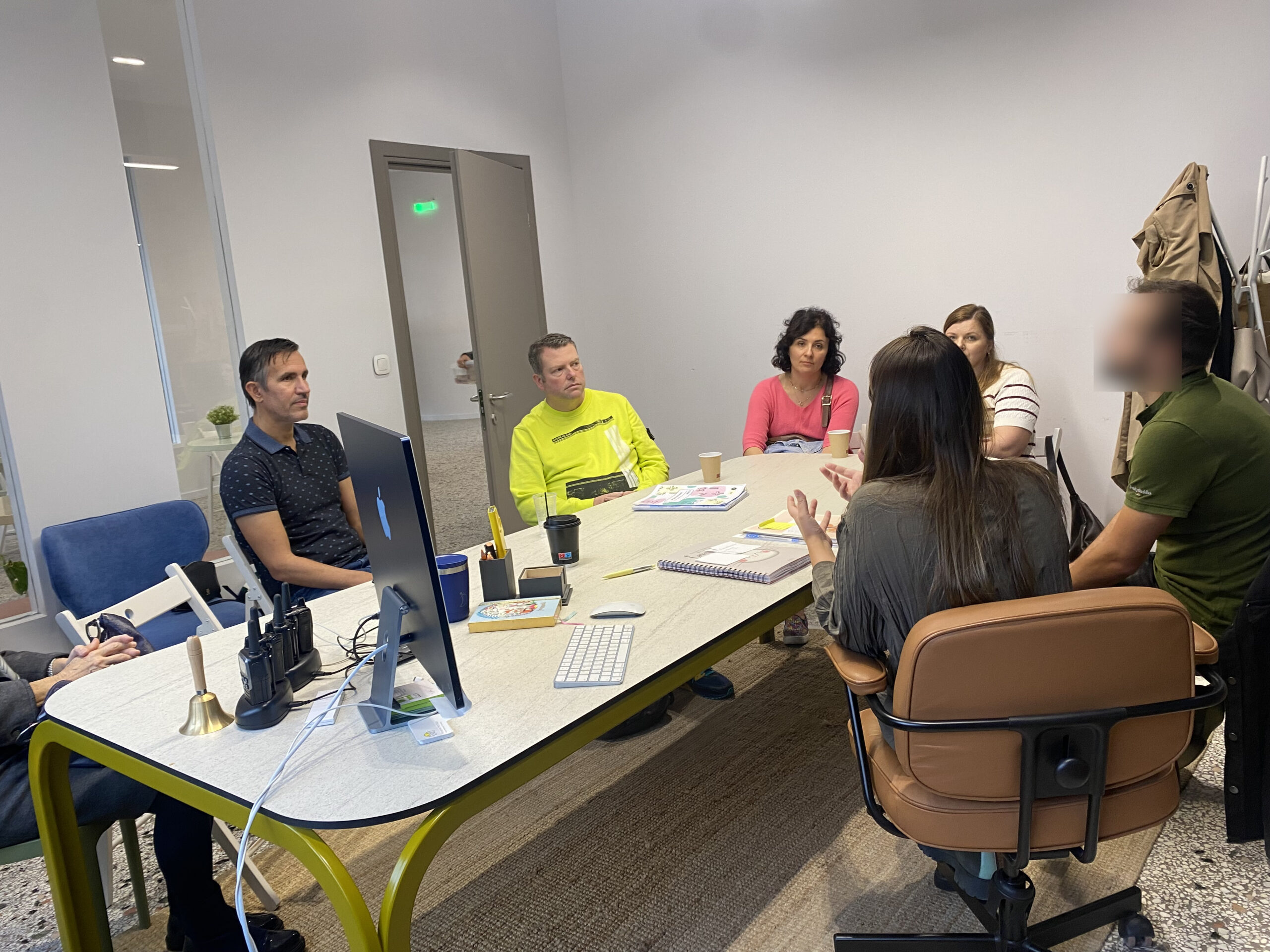
Teaching rests on the communicative approach, which places the use of the language at the centre. Participants work in pairs, take part in role play and simulations of real situations, practise listening and produce short texts. The emphasis remains firmly on oral communication.
EXPECTED LEARNING OUTCOMES
On leaving the workshop, participants use basic and thematic vocabulary with ease, hold simple conversations and write short messages. They understand basic information in English and respond with greater confidence in social and professional situations.
ASSESSMENT
Progress is monitored continuously and centres on the use of the language rather than knowledge of rules. A simple initial mapping of the level allows the pace to be adjusted, while pair activities, role play and simulations reveal each participant’s development. The short oral presentation at the end captures the communicative progress, complemented by self-assessment and a satisfaction questionnaire.
MORE INFORMATION
Contact us at contact@paideiaexperttraining.com for information about the program requirements, available implementation dates and participation costs.
