
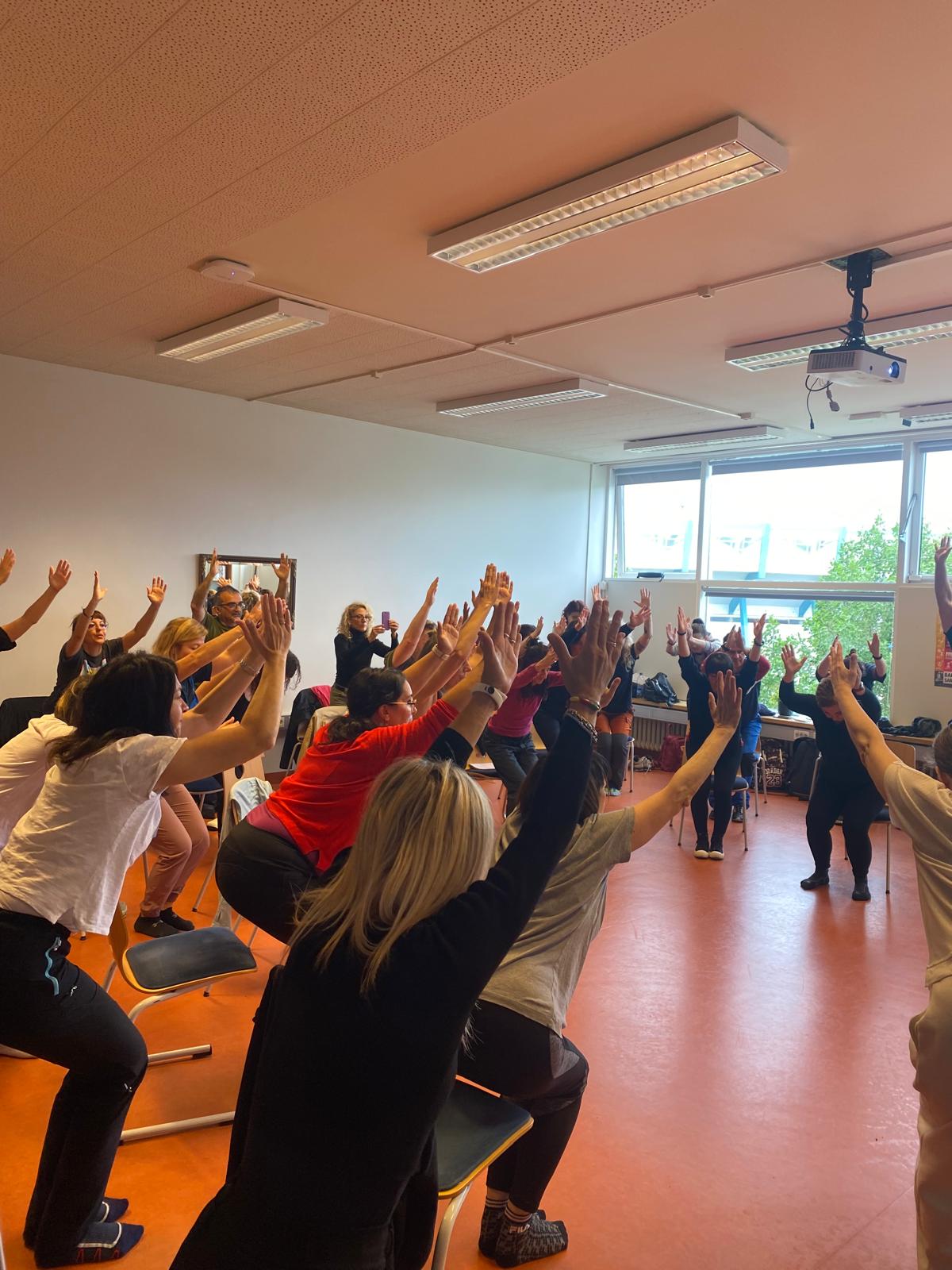
Paideia’s adult education workshops are designed as practical learning interventions for adults of different ages, social backgrounds and educational paths. Their shared aim is to strengthen basic skills, social and digital inclusion, personal development and access to learning opportunities that respond to the real needs of everyday, social and professional life.
All workshops follow the principles of adult education, with experiential and practical methods adapted to the needs of each group. On completion of each workshop, a certificate of attendance is provided, which requires participation in at least eighty percent of the sessions and states the theme, the duration and the main learning units.
OVERVIEW
The workshop uses theatre as a means of expression, communication and social connection for older adults. It requires no previous experience and does not aim at artistic performance. Through storytelling, improvisation, voice and movement, participants discover their expressive potential and enjoy a meaningful group experience.
DURATION
From 4 meetings of 4 hours to 6 meetings of 2 hours (12 hours)
CERTIFICATE
A certificate of attendance is awarded, provided the participant takes part in at least eighty percent of the sessions.
NEED ADDRESSED
Older age is often accompanied by a shrinking social circle and fewer opportunities for creative activity, especially after retirement. The gradual withdrawal from regular social contact affects mood, memory and overall wellbeing. The workshop responds to this need by offering a setting for active ageing, where creativity and companionship work in a supportive way.
EDUCATIONAL AIM
The workshop seeks to strengthen the self-expression, confidence and social connection of participants. Here theatre serves as a tool for wellbeing and participation, always adapted to the abilities and pace of the group.
WHO IT IS FOR
The workshop is addressed to older adults looking for a creative and social activity. It responds particularly to the needs of retirees who have lost their everyday roles and of people who experience loneliness or limited social contact. It is suitable for members of day centres, associations and community groups, with no requirement of previous experience.
KEY LEARNING UNITS
• Getting to know the group and theatrical expression
• Trust and group-building exercises
• Voice and clear speech
• Movement, posture and non-verbal expression
• Improvisation and creative thinking
• Telling personal stories and activating memory
• Creating a character
• Small group presentation and reflection
TRAINING METHOLOGY
All activities are designed in a gentle and adapted way, so that each participant can progress at their own pace. Theatre games, storytelling and improvisation alternate with moments of reflection, while particular care is taken to create a safe and supportive atmosphere.
EXPECTED LEARNING OUTCOMES
Over the course of the sessions, participants express themselves more comfortably, use their voice and body more consciously and strengthen their memory and concentration. Just as importantly, they gain a stable group of reference and a creative habit that counters social isolation.
ASSESSMENT
No form of examination or comparison is involved. Progress is recognised through participation in the activities and reflection at each session. The small presentation at the close serves as a celebration of the shared effort rather than a test. The participants’ feedback, on how they felt and what they gained, guides the improvement of future cycles.
MORE INFORMATION
Contact us at contact@paideiaexperttraining.com for information about the program requirements, available implementation dates and participation costs.
