
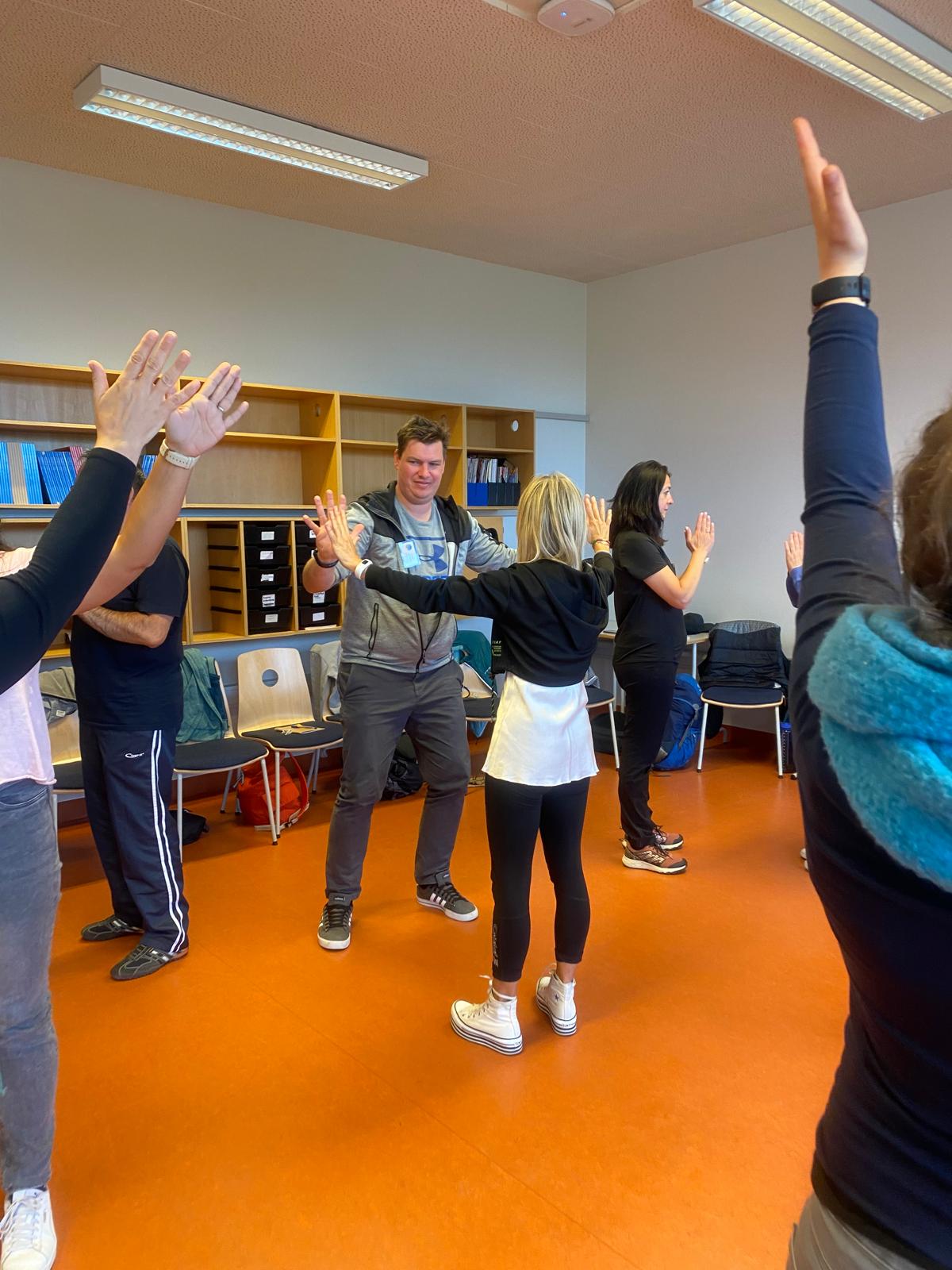
Paideia’s adult education workshops are designed as practical learning interventions for adults of different ages, social backgrounds and educational paths. Their shared aim is to strengthen basic skills, social and digital inclusion, personal development and access to learning opportunities that respond to the real needs of everyday, social and professional life.
All workshops follow the principles of adult education, with experiential and practical methods adapted to the needs of each group. On completion of each workshop, a certificate of attendance is provided, which requires participation in at least eighty percent of the sessions and states the theme, the duration and the main learning units.
OVERVIEW
The workshop focuses on understanding disability and on the practical support of equal participation of people with disabilities in social, educational and working life. It combines knowledge of rights and accessibility principles with practical skills in communication and support, so that inclusion turns from a principle into an everyday practice.
DURATION
16 hours, in 4 sessions of 4 hours.
CERTIFICATE
A certificate of attendance is awarded, provided the participant takes part in at least eighty percent of the sessions.
NEED ADDRESSED
Despite progress in the field of rights, disability is still approached through stereotypes and fragmented practices, while accessibility barriers remain visible in education, work and public space. Both people with disabilities themselves and those around them rarely have access to organised and reliable information. The workshop fills this gap in knowledge and practical support.
EDUCATIONAL AIM
The aim of the workshop is to strengthen both the understanding and the capacity for action of participants on matters of disability. The emphasis falls on moving from theoretical awareness to the concrete support of autonomy and participation.
WHO IT IS FOR
The workshop is addressed to a wide circle of interested people. It concerns people with disabilities themselves, their families and carers, but also employees, volunteers, trainers and employers who come into contact with matters of inclusion. Particular weight is given to supporting people who face barriers to education and employment, as well as those who assist them without previous training.
KEY LEARNING UNITS
• Basic concepts of disability and inclusion
• Stereotypes, social attitudes and barriers to participation
• Accessibility and the design of inclusive environments
• Respectful communication and active listening
• Supporting people with different communication needs
• Independent living and social participation
• Mental health, resilience and social support
• Employment, skills and equal opportunities
• Designing a small intervention for greater accessibility
TRAINING METHOLOGY
Learning is built through experiential activities, case studies and role play that bring participants into contact with real situations. Practical communication exercises and the design of small interventions carry knowledge into the field of application, in communities and workplaces.
EXPECTED LEARNING OUTCOMES
At the end of the programme, participants recognise barriers to participation and understand the basic principles of accessibility. They communicate with greater respect and effectiveness, support people with disabilities more substantially and are able to propose concrete practices for more inclusive environments.
ASSESSMENT
Assessment has a practical orientation and avoids theoretical examination. Case studies, role play and communication exercises allow progress to be followed gradually. The intervention plan each participant prepares reflects their ability to translate knowledge into action, while self-assessment and a satisfaction questionnaire contribute to the improvement of the programme.
MORE INFORMATION
Contact us at contact@paideiaexperttraining.com for information about the program requirements, available implementation dates and participation costs.
