
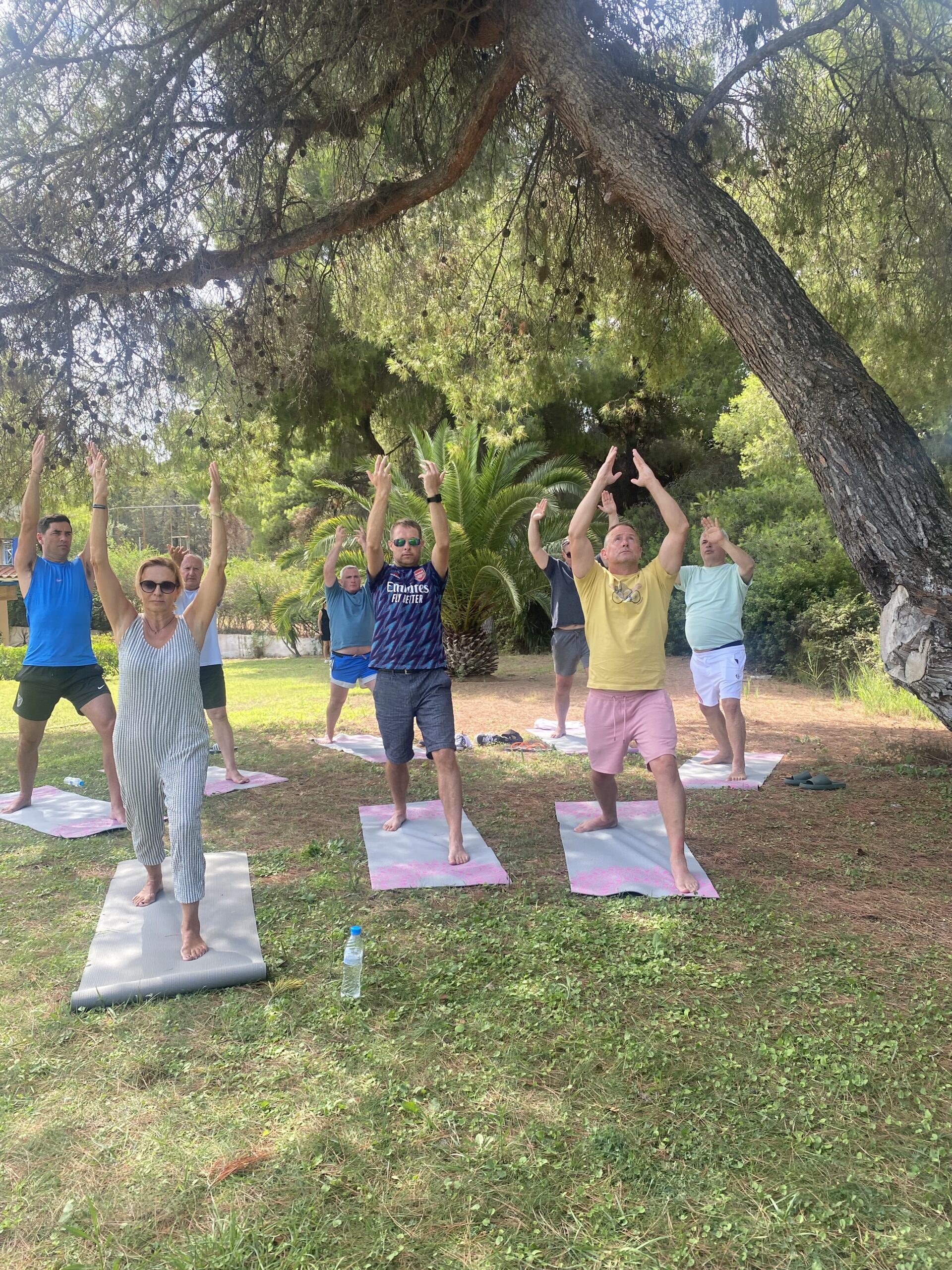
Paideia’s adult education workshops are designed as practical learning interventions for adults of different ages, social backgrounds and educational paths. Their shared aim is to strengthen basic skills, social and digital inclusion, personal development and access to learning opportunities that respond to the real needs of everyday, social and professional life.
All workshops follow the principles of adult education, with experiential and practical methods adapted to the needs of each group. On completion of each workshop, a certificate of attendance is provided, which requires participation in at least eighty percent of the sessions and states the theme, the duration and the main learning units.
OVERVIEW
The workshop offers practical skills in stress management, self-awareness and emotional balance. Wellbeing is approached not as an abstract notion but as an everyday ability that affects an adult’s functioning, learning and participation. The techniques taught are simple and immediately applicable, requiring no specialised knowledge.
DURATION
From 4 meetings of 3 hours to 6 meetings of 2 hours (12 hours).
CERTIFICATE
A certificate of attendance is awarded, provided the participant takes part in at least eighty percent of the sessions.
NEED ADDRESSED
Stress, exhaustion and difficulty in self-regulation weigh on the daily lives of many adults. The demands of work, the responsibilities of care and financial uncertainty leave little room for mental recovery, while access to organised support remains limited. The workshop meets the need for simple and accessible wellbeing tools with a real impact on everyday life.
EDUCATIONAL AIM
The workshop sets out to help participants better recognise their thoughts and emotions, reduce stress and cultivate more balanced everyday habits.
WHO IT IS FOR
The workshop is addressed to adults who experience stress, pressure or exhaustion and seek practical means of support. It is particularly useful for workers under heavy load, for carers who neglect their own wellbeing and for people managing conditions of uncertainty. Those who simply wish to strengthen their resilience also benefit.
KEY LEARNING UNITS
• Introduction to the notion of mindfulness and wellbeing
• Recognising stress and pressure factors
• Breathing and relaxation exercises
• Body awareness and the body scan technique
• Emotional self-regulation
• Mindful communication
• Integrating mindfulness into daily life
• Preparing a personal wellbeing plan
TRAINING METHOLOGY
The workshop rests on guided practices and gentle exercises, alternating with individual reflection and group discussion. Self-observation activities and the design of small everyday practices help participants carry what they learn into their own daily life.
EXPECTED LEARNING OUTCOMES
On completing the workshop, participants apply simple relaxation and self-regulation techniques and recognise earlier the factors that put them under pressure. They improve their concentration and emotional awareness and hold a personal plan of practices they can integrate into their lives.
ASSESSMENT
No form of grading is involved. At the start, each participant discreetly maps their own stress levels and main pressure factors, so that a point of reference exists. Individual reflection and self-observation activities show the development, while the personal wellbeing plan gathers the practices each person adopts. The participants’ feedback completes the assessment.
MORE INFORMATION
Contact us at contact@paideiaexperttraining.com for information about the program requirements, available implementation dates and participation costs.
